(Mechanism, Not Ideology)
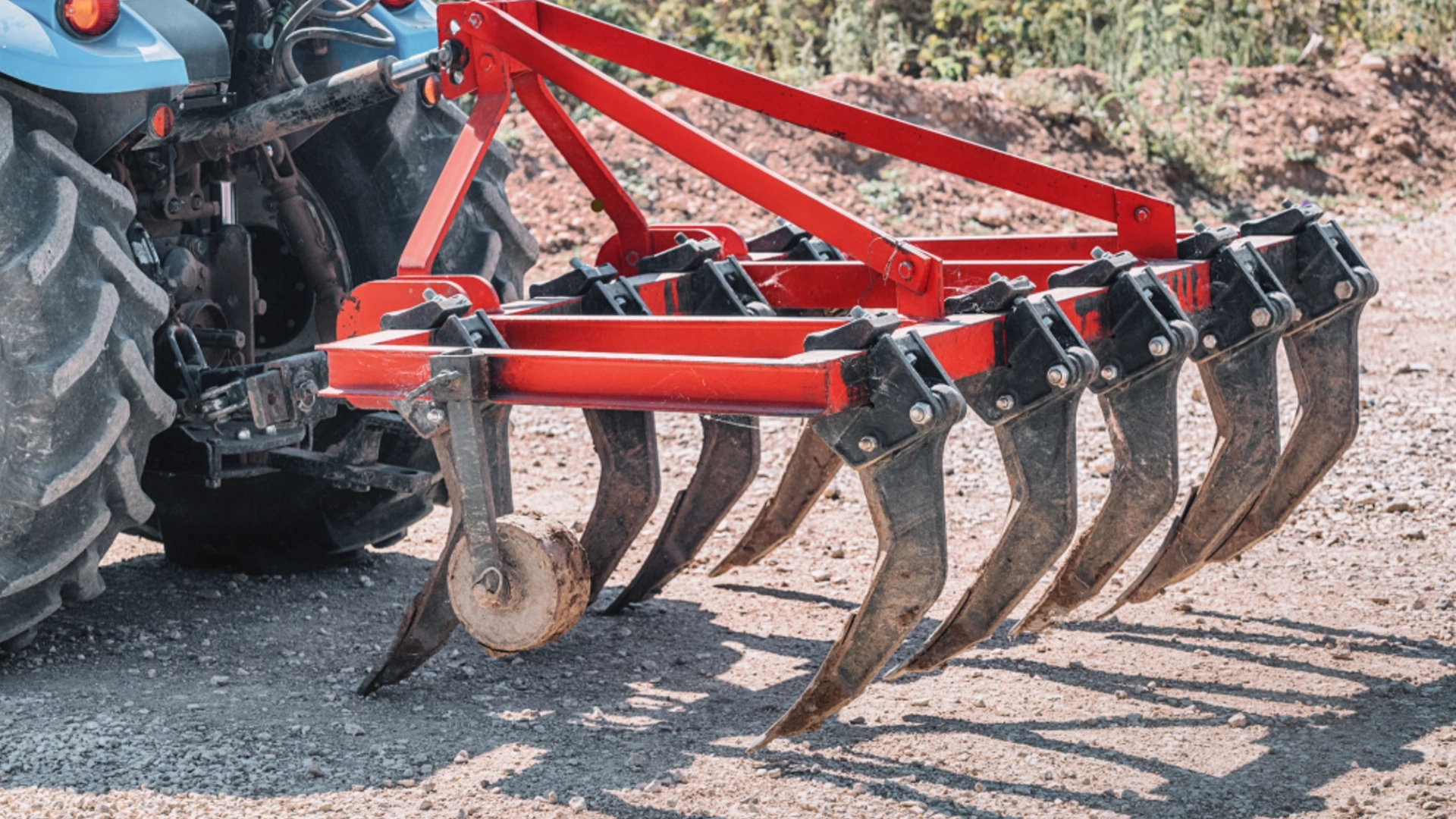
When soil health declines, fertilizer often gets the blame. Too much urea. Too many chemicals. While fertilizer misuse does affect soil, it is rarely the first or most powerful disruption. On most Indian farms, tillage changes soil biology more deeply and more immediately than fertilizer ever does.
At Terragaon Farms in Birbhum, West Bengal, we saw this clearly only after slowing down operations. Fields that received similar nutrients behaved very differently depending on how often and how deeply they were tilled. This article explains the biological mechanisms behind tillage, without ideology or moral framing, and why understanding this matters for small farms.
In short:
Tillage alters soil biology by physically breaking microbial habitats, disrupting fungal networks, accelerating carbon loss, and changing moisture dynamics. These effects often outweigh the impact of fertilizer itself.
Soil biology is a physical system, not just a chemical one
Soil life does not float freely. Microbes live inside aggregates, along root channels, and along fungal networks. These physical structures protect them from heat, drying, and predation.
Fertilizers change nutrient availability. Tillage changes the habitat.
When habitat is damaged repeatedly, biology declines even if nutrients are present. This is why soils can test “adequate” on paper but behave poorly in the field.
What actually happens during tillage
When soil is ploughed or rotavated, several things occur at once.
Soil aggregates are broken open. Fungal hyphae are torn apart. Pores that held air and water collapse. Buried organic matter is suddenly exposed to oxygen. Moisture evaporates faster.
These are physical shocks. Biology responds immediately.
Microbial populations drop not because food disappears, but because shelter does.
Fungal networks are the first major casualty
Fungi, especially mycorrhizal fungi, play a critical role in nutrient transport and soil aggregation. They form long, thread-like networks that move phosphorus, micronutrients, and water to plant roots.
Tillage cuts these networks repeatedly.
Unlike bacteria, fungi recover slowly. Each tillage event resets their progress. In systems with frequent ploughing, fungal dominance never establishes. This shifts soil biology toward short-lived bacterial cycles that require constant stimulation.
This shift changes how soil behaves under stress.
Carbon loss accelerates after tillage
Organic carbon in soil is protected when it is physically enclosed within aggregates.
Tillage breaks those aggregates and exposes carbon to oxygen. Microbes then decompose it rapidly, releasing carbon dioxide. This creates a short-term nutrient flush that looks like fertility but reduces long-term soil reserves.
Fertilizer adds nutrients. Tillage removes stored energy.
This is why soils can look productive for a few seasons and then decline despite continued input use.
Moisture stress increases even with adequate rainfall
Tillage affects water more than most farmers realize.
Broken aggregates reduce infiltration. Collapsed pores reduce storage. Exposed surfaces increase evaporation. After rain, soil may crust. During dry spells, moisture disappears quickly.
Microbes are highly sensitive to moisture fluctuation. Frequent wet-dry stress reduces microbial diversity and stability.
Fertilizer cannot correct this. Only structure can.
Why fertilizer gets blamed instead
Fertilizer effects are visible and measurable. Tillage effects are gradual and structural.
When yields decline, fertilizer rates are often increased to compensate. This creates the impression that fertilizer is the cause of soil decline, when in fact it is being used to mask structural damage caused by repeated disturbance.
This does not mean fertilizer is harmless. It means tillage sets the stage on which fertilizer effects play out.
Reduced tillage does not mean zero intervention
This is where confusion often arises.
Reducing tillage does not mean abandoning soil preparation entirely. It means disturbing soil only when necessary and as gently as possible. Transplanting, bed shaping, and compost incorporation still occur.
The difference is frequency and intensity.
Systems that disturb soil occasionally recover biology. Systems that disturb soil repeatedly prevent recovery.
Why small farms feel tillage impact faster
On small land, soil volume is limited and reused continuously.
Repeated tillage affects the same soil year after year without rest. There is no untouched area to buffer damage. Decline becomes visible sooner.
This is why small farms often struggle with hard soil, poor infiltration, and declining response to inputs.
Understanding tillage impact helps explain this pattern.
What changes when tillage is reduced
At Terragaon Farms, areas with reduced disturbance showed gradual but clear shifts.
Soil stayed moist longer. Earthworm activity increased. Weed pressure changed rather than disappeared. Crops showed steadier growth under heat stress.
These changes were not instant. They appeared over seasons, not weeks.
Biology needs time once disturbance reduces.
Fertilizer in a disturbed soil versus a stable soil
Fertilizer behaves differently depending on soil structure.
In disturbed soil, nutrients move quickly, leach easily, and require frequent reapplication. In stable soil, nutrients cycle slowly, remain available longer, and are buffered by biology.
The same fertilizer rate can produce opposite outcomes depending on tillage history.
This is why tillage influences fertilizer efficiency more than fertilizer influences biology.
Final thoughts
Tillage changes soil biology more than fertilizer because it alters the physical environment where life exists.
This is not an argument against all tillage or for ideology-driven farming. It is a biological explanation of cause and effect. When disturbance is frequent, biology cannot stabilize. When disturbance is reduced, biology begins to organize itself again.
For small farms, understanding this mechanism is empowering. It shifts attention from chasing inputs to protecting structure. Once structure is protected, many other problems soften on their own.
Soil biology does not ask for perfection. It asks for stability.

Krittika Das is a field practitioner and primary author at Terragaon Farms in Birbhum, West Bengal. Her writing is grounded in daily farm work, long-term soil observation, and small-land realities of eastern India. She focuses on natural farming, soil ecology, ethical dairy, and low-input systems, translating field experience into clear, practical knowledge for farmers and conscious food consumers.