
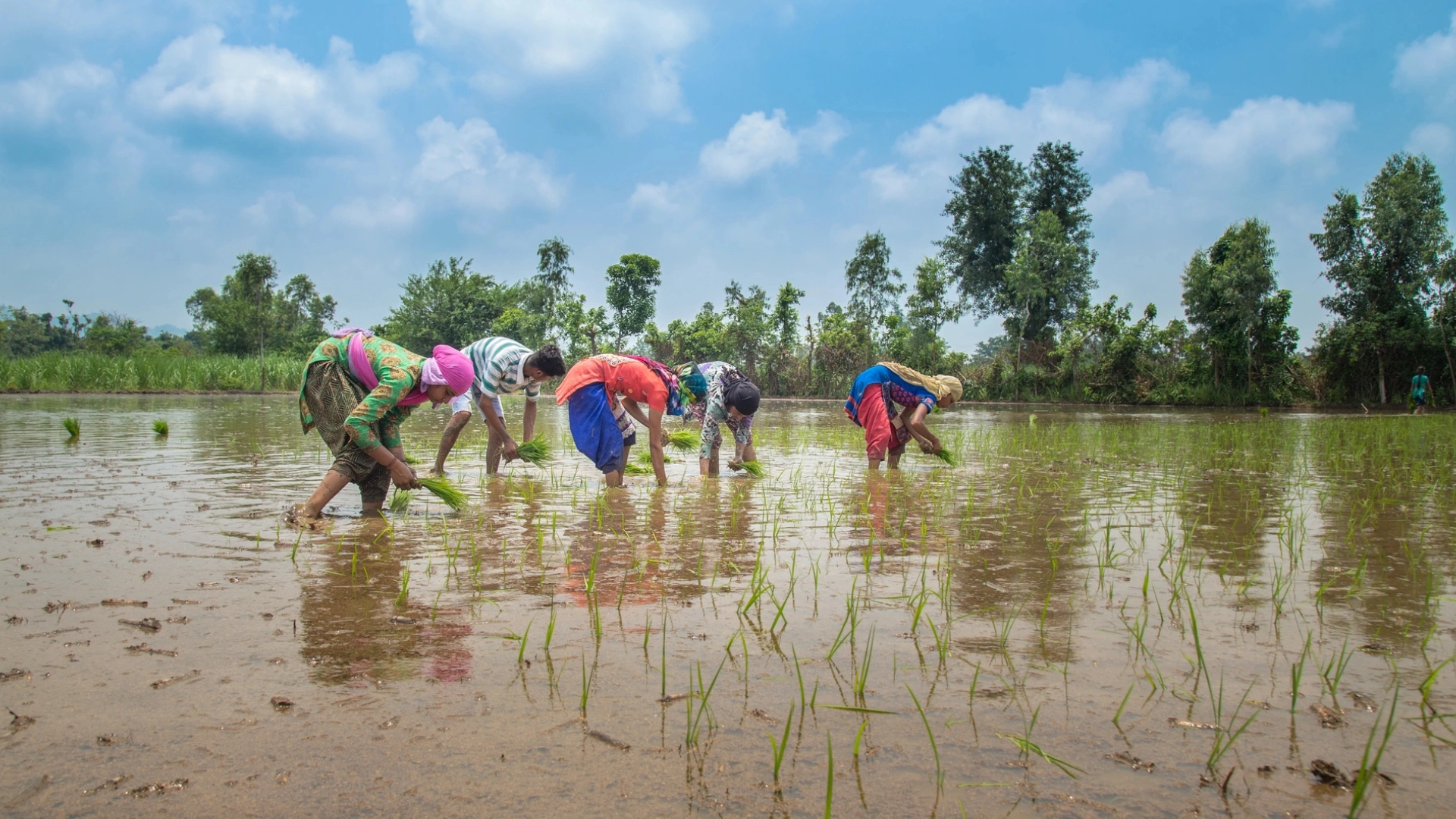
For small farmers in India, the real question is rarely whether natural farming is good or bad. The real question is simpler and harder at the same time. How much will it cost me, especially in the first few years.
On small land, cost decides survival. Even one season of high expense without return can force farmers back into chemical dependency or out of farming altogether.
At Terragaon Farms in Birbhum, West Bengal, natural farming proved workable only after we understood its cost structure honestly. Not as theory. Not as averages. But as real money going out and real money coming in, season after season.
This article breaks down the actual cost structure of natural farming on small land in India and explains where money reduces, where patience is required, and where unrealistic expectations cause failure.
Why cost behaves differently on small land
Small land magnifies both mistakes and savings.
When land is limited, every input purchase matters more. Fertilizers, pesticides, hired labor, irrigation, and machinery costs do not scale down neatly. Many expenses remain fixed regardless of land size.
Natural farming works on small land because it targets recurring expenses first, not yield numbers. When costs stabilize, farming becomes predictable even before income increases.
Major cost heads in conventional small farming
Before understanding natural farming costs, beginners must understand where money usually goes.
Fertilizer and pesticide purchases consume a large share of cash. Hybrid seeds require repeated buying. Irrigation costs rise due to poor soil moisture retention. Labor increases because weeds and pest pressure remain high.
These costs often rise every season, even when yields remain flat.
Natural farming changes this structure gradually, not overnight.
Cost head one: Inputs and fertilizers
In natural farming, the biggest cost reduction comes from eliminating chemical fertilizers and pesticides.
On small land, this does not mean zero cost immediately. The transition phase may still require some inputs, but expenses reduce steadily.
Indigenous microbial inputs prepared on the farm cost very little beyond labor. Mulching materials are often locally available. Compost uses waste rather than purchased materials.
Over time, fertilizer and pesticide expenses drop close to zero, which is where natural farming shows its strongest financial advantage.
Cost head two: Seeds and planting material
Conventional farming often relies on purchased seeds every season.
Natural farming encourages seed saving and the use of locally adapted varieties. This reduces cash outflow and improves crop resilience.
On small land, saving seeds from even one successful crop can cover future seasons. This is a slow but powerful cost reducer.
Cost head three: Labor
Labor behaves differently under natural farming.
In the first year, labor may increase slightly due to learning, mulching, and observation. This phase often feels expensive because time investment rises.
By the second or third season, labor often reduces. Weed pressure drops under mulching. Pest outbreaks reduce. Emergency interventions decline.
On family-managed farms, this stability matters more than short-term labor spikes.
Cost head four: Irrigation and water
Poor soil structure increases irrigation costs.
Natural farming improves water retention through organic cover and biological activity. Mulched soil loses less moisture and absorbs rainfall better.
On small land, even small reductions in irrigation frequency lower diesel, electricity, or pumping costs noticeably over a season.
Cost head five: Pest and disease management
In conventional systems, pest control is a recurring expense.
Natural farming reduces this cost by shifting focus from killing pests to stabilizing ecosystems. Crop diversity, healthy soil, and selective intervention reduce outbreaks.
Costs do not disappear completely, but they become occasional rather than routine.
What natural farming does not reduce immediately
Natural farming does not eliminate all costs instantly.
Land preparation, basic tools, fencing, and initial learning still require investment. Yield fluctuations may occur during transition.
Beginners who expect zero cost from day one often become disappointed. Natural farming is a cost stabilizer, not a magic reset.
Typical cost pattern over time on small land
In many small farm cases, expenses reduce first, then yields stabilize.
Year one focuses on learning and soil protection. Costs reduce partially. Year two often shows clearer savings in inputs and water. By year three, systems stabilize and net income improves even if yields remain moderate.
This pattern varies by soil type, climate, and prior chemical use, but the direction remains similar.
Why natural farming protects small farmers financially
The greatest financial benefit of natural farming on small land is not higher profit margins. It is reduced risk.
Lower dependency on purchased inputs means fewer loans. Fewer sudden expenses mean fewer financial shocks. Predictable costs reduce anxiety.
For small farmers, avoiding loss is often more important than chasing profit.
Common cost mistakes beginners make
Some beginners overspend on commercial organic inputs. Others attempt full conversion without soil support. Some invest in infrastructure too early.
Natural farming works best when costs are reduced gradually and systems are allowed to stabilize before expansion.
Simplicity protects cash flow.
Final thoughts
Natural farming cost breakdown on small land reveals a simple truth. The system does not make farming free. It makes farming predictable.
At Terragaon Farms, costs reduced not because we cut corners, but because we stopped paying repeatedly for problems that healthy soil prevents naturally.
For small land farmers in India, natural farming is not about spending nothing. It is about spending less, spending wisely, and spending in ways that improve the farm instead of exhausting it.

Krittika Das is a field practitioner and primary author at Terragaon Farms in Birbhum, West Bengal. Her writing is grounded in daily farm work, long-term soil observation, and small-land realities of eastern India. She focuses on natural farming, soil ecology, ethical dairy, and low-input systems, translating field experience into clear, practical knowledge for farmers and conscious food consumers.