
Natural Farming
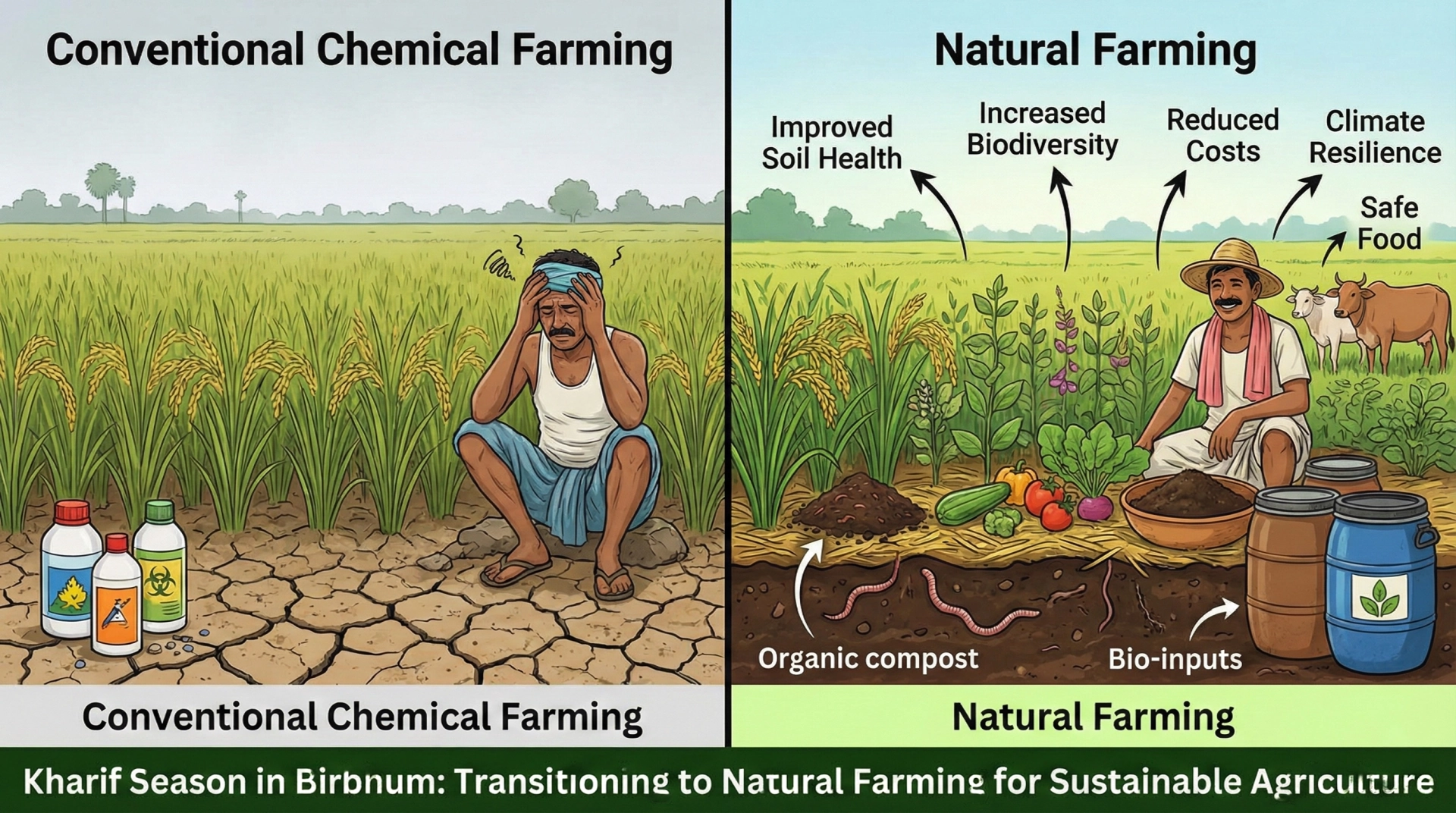
How Kharif Farming Actually Works in Birbhum
In Birbhum’s lateritic belt, Kharif planning in natural farming is not about crop choice. It is about monsoon risk control. The success of a Kharif season here depends on three non-negotiable conditions being met before sowing begins: soil must already be biologically active, rainfall must be continuous rather than episodic, and crops must be selected
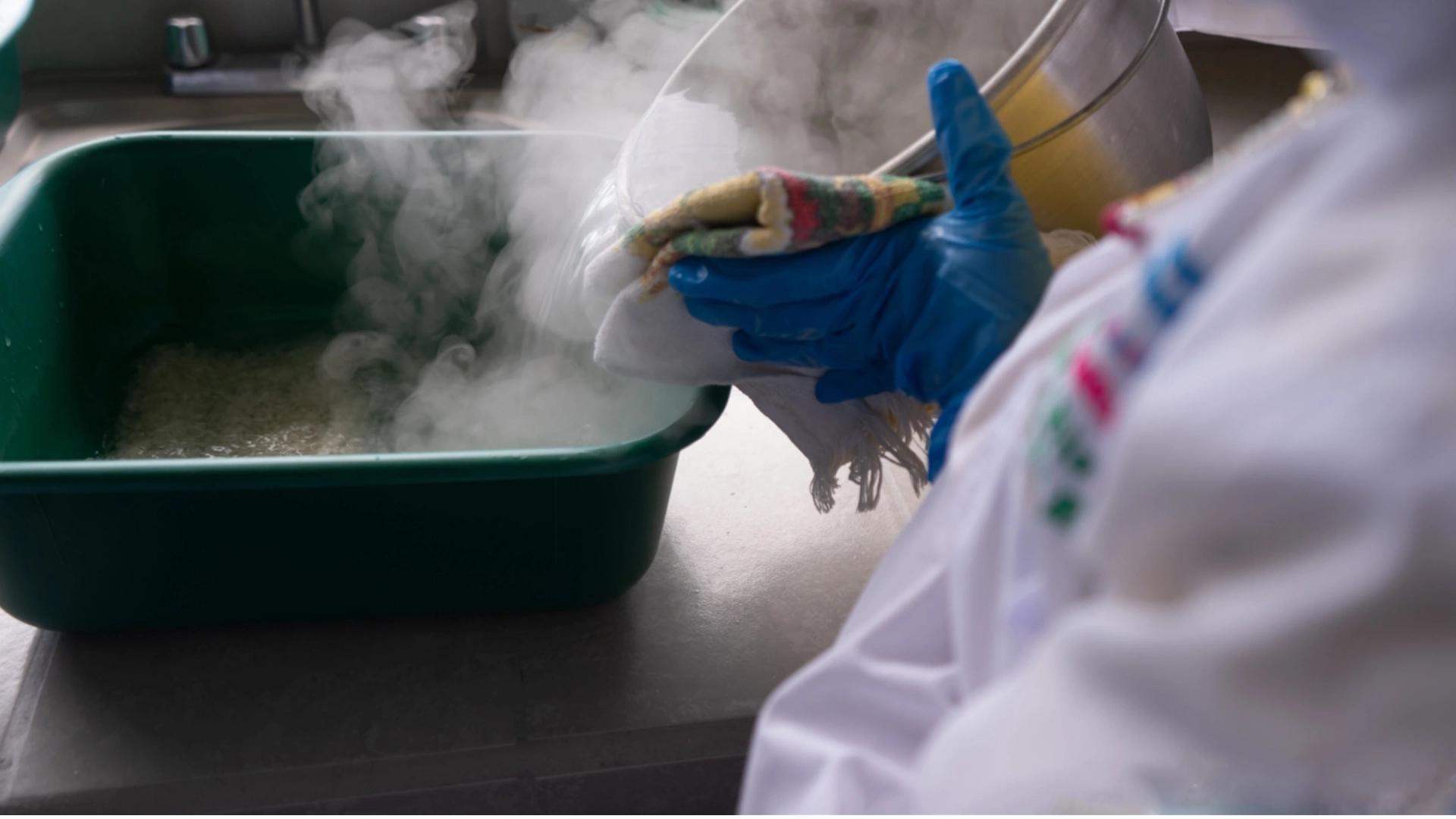
Grow Your Own Trichoderma Using Rice
Trichoderma can be multiplied safely at home using cooked rice, but only under strict moisture, temperature, and hygiene discipline. This method does not produce laboratory-grade or strain-pure cultures. It produces a field-effective fungal inoculum suitable for soil disease suppression, compost activation, Banana Circles, and spice beds. At Terragaon Farms in Birbhum, this method has consistently
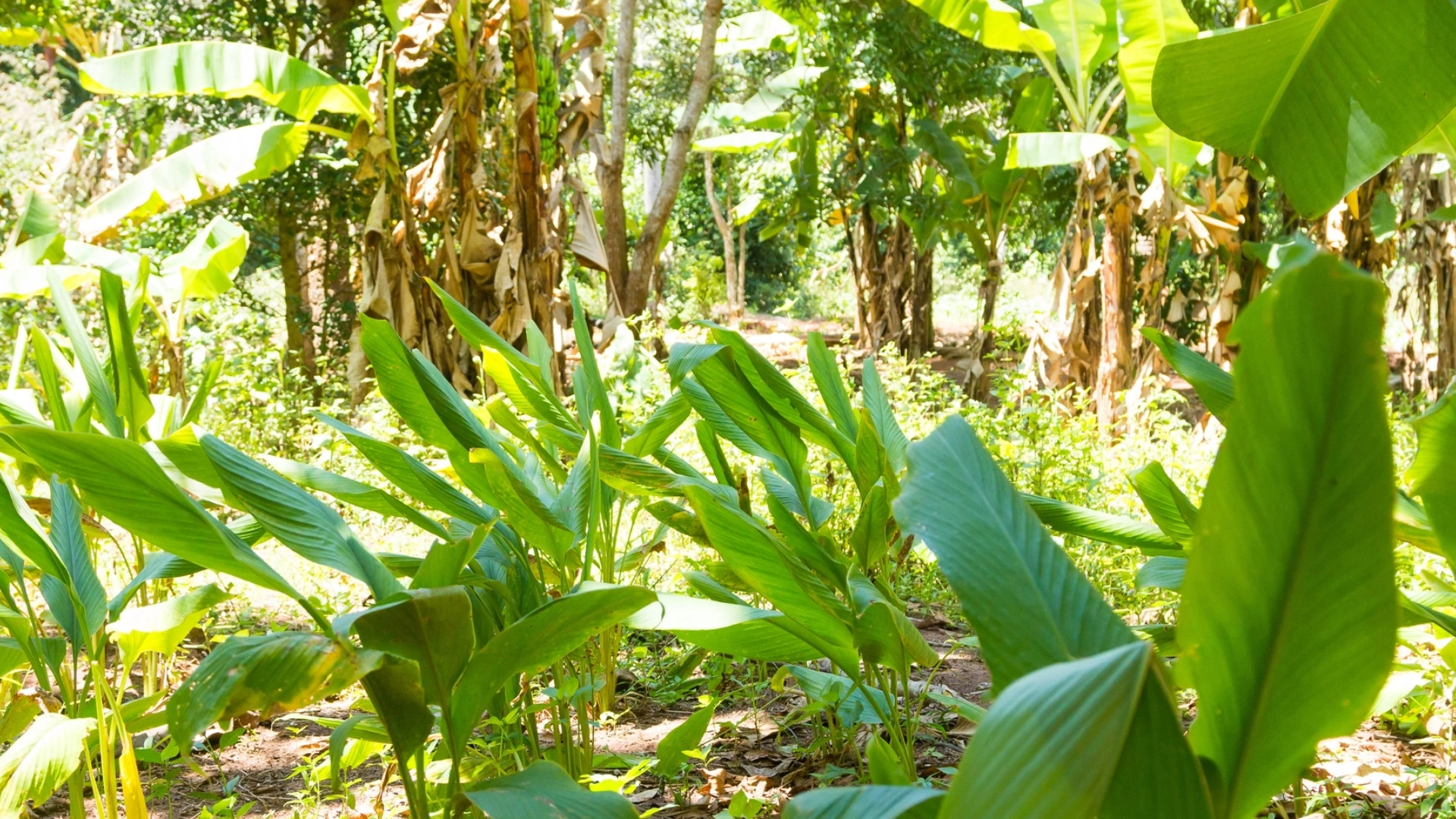
The Hidden Spices Growing Under Banana Trees
The shaded zone beneath a mature Banana Circle is not wasted space. In Birbhum’s lateritic climate, it is the most thermally stable and biologically productive micro-site on the farm. When open soil temperatures exceed 55–60°C in May, soil beneath the banana canopy consistently remains between 26–30°C. This temperature window allows high-value rhizomes such as turmeric,
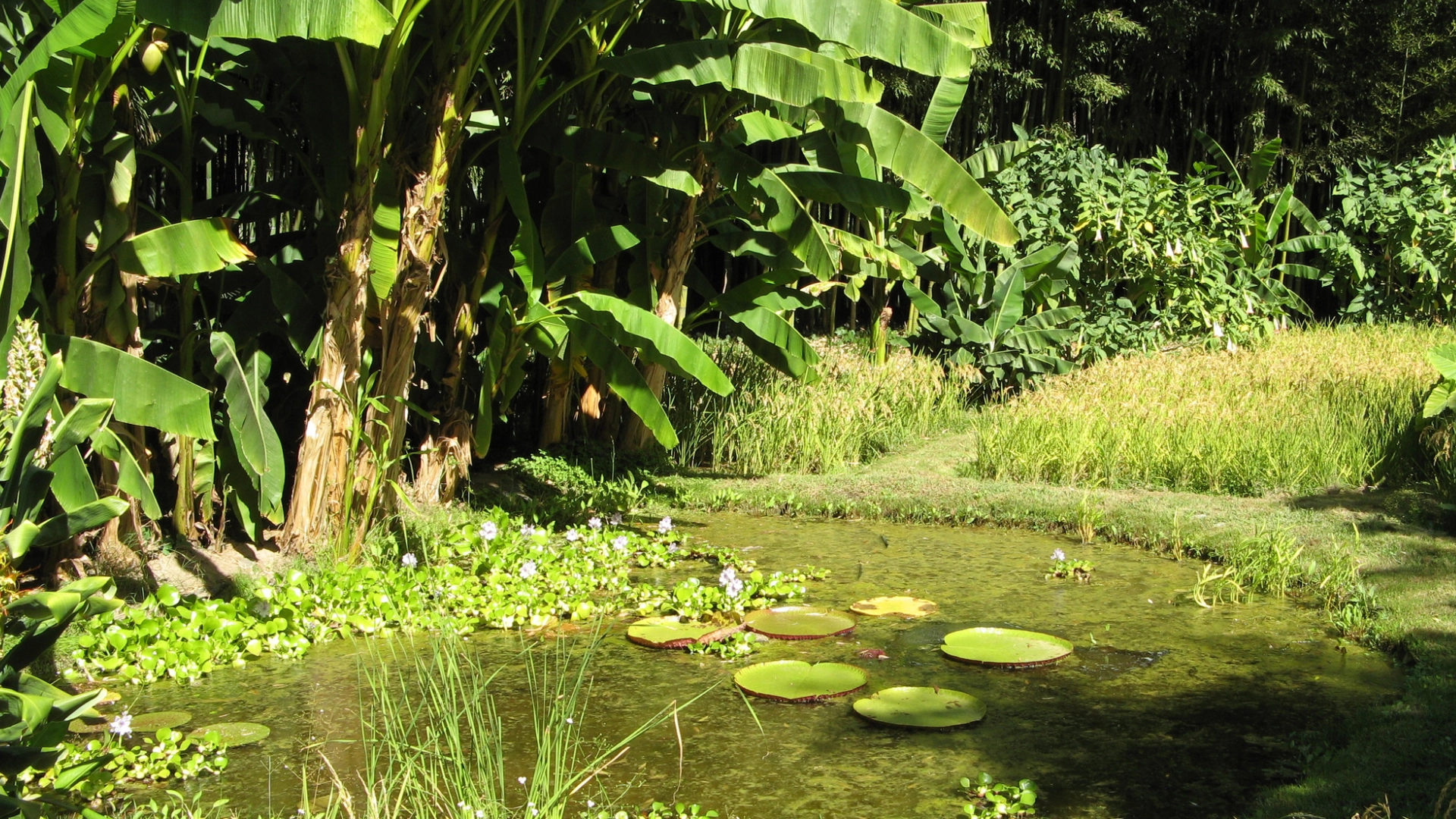
How Kitchen Waste Becomes Food on Small Indian Farms
A Banana Circle is not a planting trick. It is a passive biological water-treatment and nutrient-recovery system designed for small farms in West Bengal. It safely absorbs household greywater and kitchen waste without electricity, without chemicals, and without contaminating groundwater, while converting that waste stream into food and micro-climate control. At Terragaon Farms in Birbhum,
Why Zero Waste Farming Is About Money Not Ideology
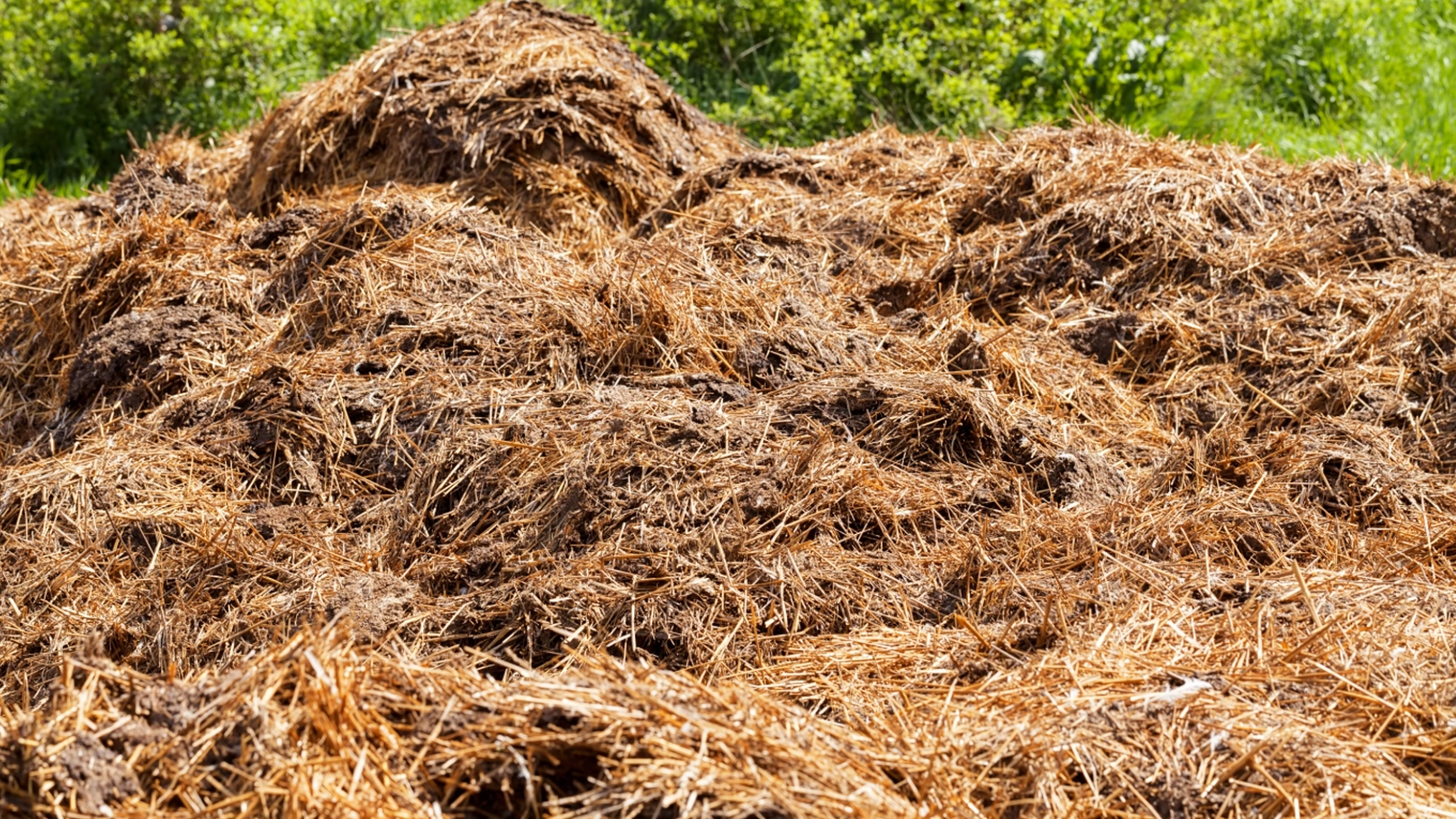
At Terragaon Farms in Birbhum, zero waste farming is not an environmental slogan. It is an economic survival model. It does not mean producing no garbage. It means designing a farm system where the idea of waste no longer exists because every byproduct is structurally reused inside the farm boundary. Zero waste farming replaces the
Common Mistakes Farmers Make When Switching to Natural Farming
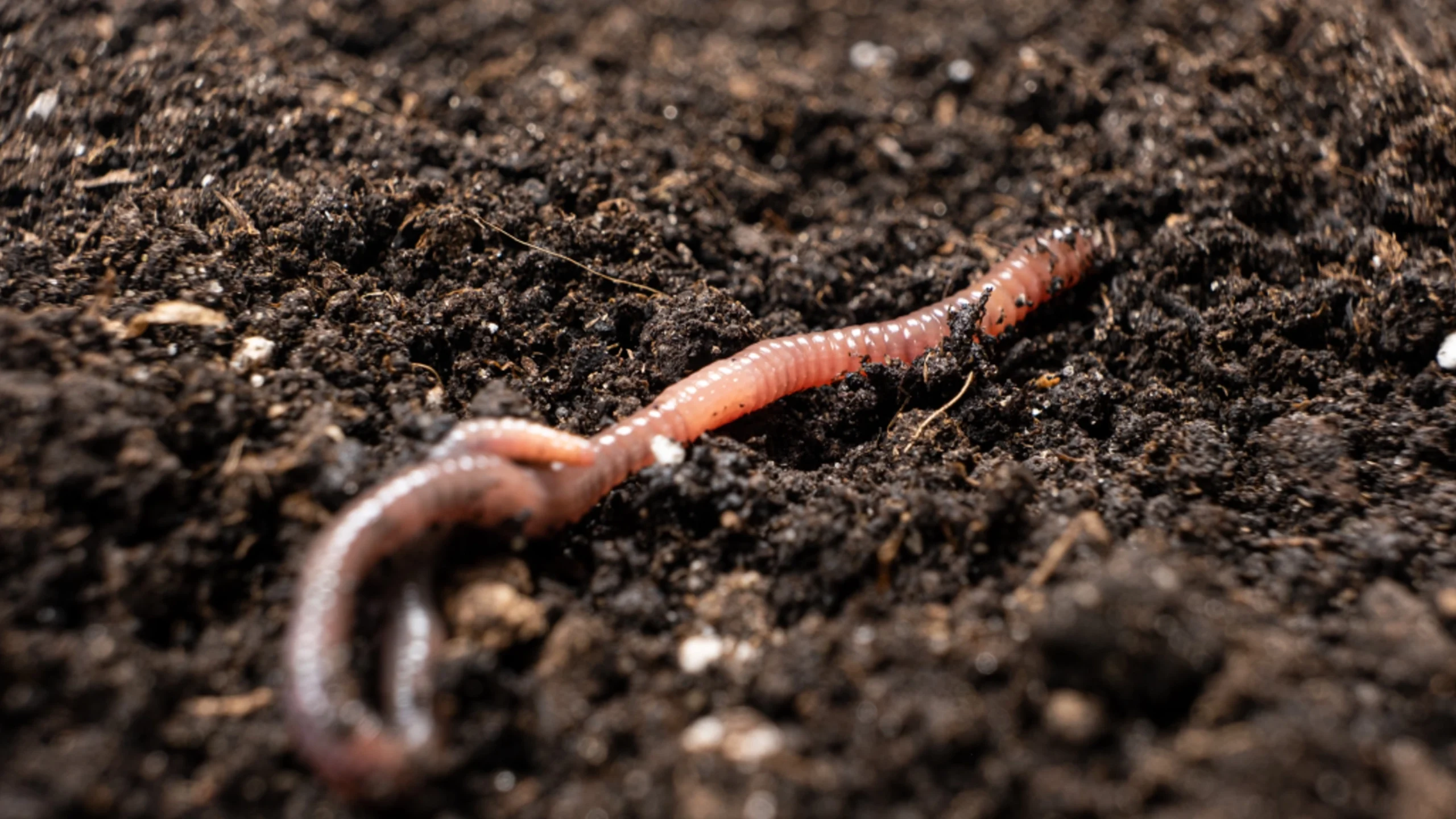
Most failures in natural farming do not come from the method itself. They come from how the transition is handled. Across India, many farmers try natural farming with genuine hope, only to abandon it after one or two seasons. When this happens, the conclusion is often that natural farming does not work. In reality, what
How Long Soil Takes to Recover After Chemical Farming
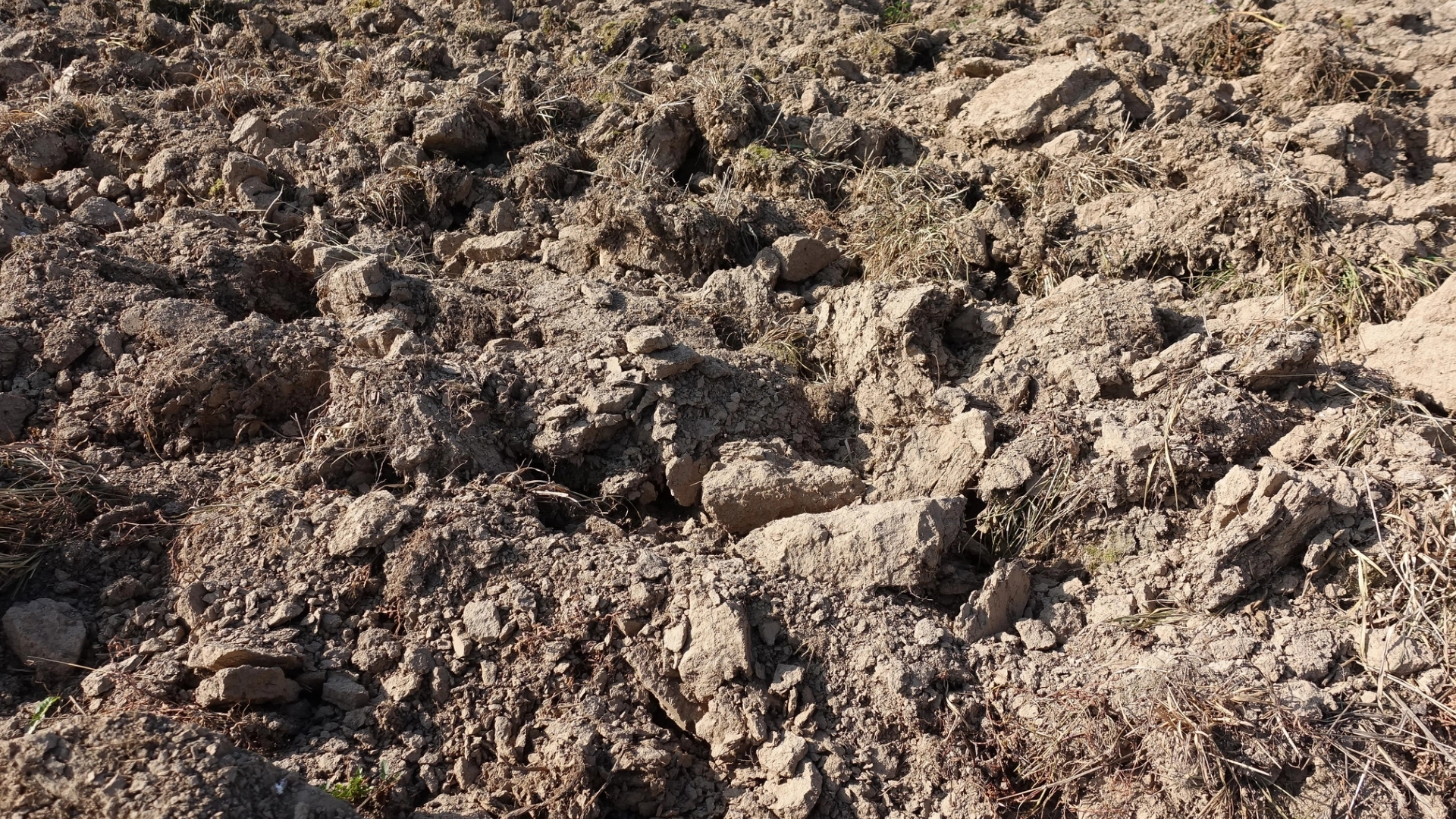
One of the most common and honest questions farmers ask before switching to natural farming is this. How long will my soil take to recover after years of chemical use. This question matters because soil recovery is not abstract. It affects yield stability, input reduction, water use, and confidence. If expectations are wrong, farmers often
Natural Farming vs Organic Farming in India
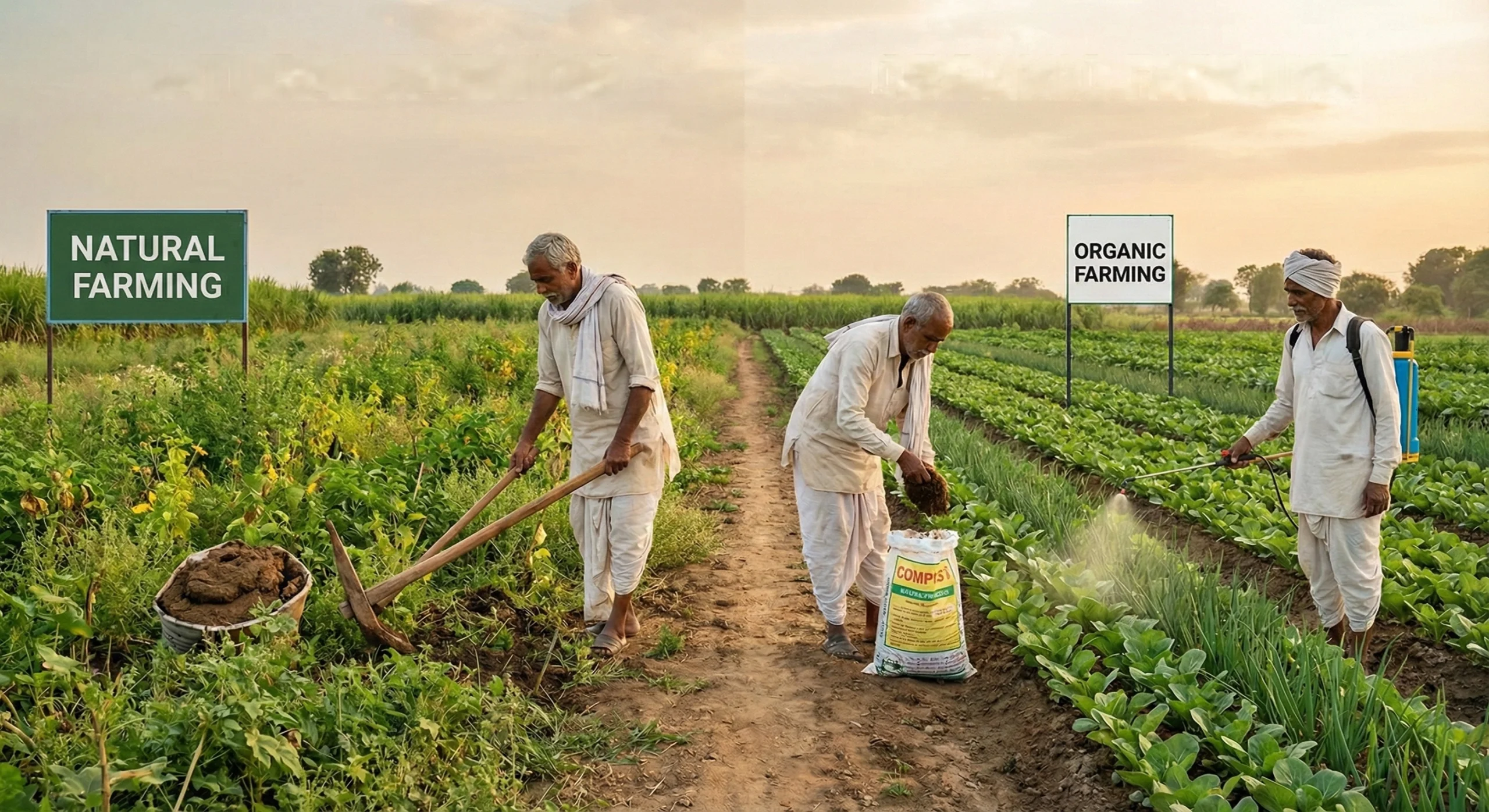
In India, natural farming and organic farming are often spoken about as if they are the same thing. For small farmers, this confusion is not academic. It affects costs, risk, and whether farming remains viable beyond a few seasons. At Terragaon Farms in Birbhum, West Bengal, we have practiced and observed both approaches closely. The
Natural Farming Profitability on Small Farms
Profitability on small farms is often misunderstood. Most discussions focus on yield per acre or market price per kilogram. On small holdings, neither decides survival. What matters is whether a farm can generate stable income without pushing the family into debt, stress, or repeated reinvestment just to stay afloat. At Terragaon Farms in Birbhum, West
Natural Farming Cost Breakdown on Small Land
For small farmers in India, the real question is rarely whether natural farming is good or bad. The real question is simpler and harder at the same time. How much will it cost me, especially in the first few years. On small land, cost decides survival. Even one season of high expense without return can